The Humboldt Bay Trail has become one of the most useful ways to experience the landscape surrounding Humboldt Bay on foot or by bicycle. Connecting waterfronts, wetlands, communities, and recreation areas, the growing trail network offers visitors a different perspective on California’s North Coast. Now, the Humboldt Bay Trail expansion is drawing renewed attention as planners look at extending the regional trail system farther south toward College of the Redwoods.
For travelers exploring Humboldt County, California, the trail is more than a place for exercise. It can be part of a day spent birdwatching, photographing the bay, visiting Eureka and Arcata, or simply enjoying an easy outdoor activity between longer excursions into the redwoods.
What Is the Humboldt Bay Trail?
The Humboldt Bay Trail is a network of paved multi-use paths around Humboldt Bay. According to Humboldt County, the trail system is designed for walking, running, bicycling, and other forms of non-motorized travel.
Rather than functioning as one isolated recreational path, the system connects several existing trail segments. Eureka has nearly seven miles along its waterfront trail, while Arcata has approximately four miles of trail extending through areas that include the Arcata Marsh and Wildlife Sanctuary.
A significant piece of the network was completed when a 4.3-mile county trail segment linking the existing Eureka and Arcata systems opened to the public in 2025. That connection made it easier for people to travel between the two communities while remaining on a separated multi-use route for much of the journey.
Why the Trail Matters for Visitors
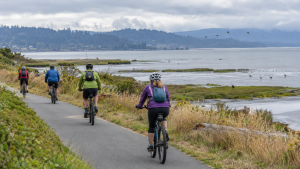 Humboldt County is best known for its enormous coast redwoods, but Humboldt Bay provides another side of the region. Open water, tidal marshes, coastal birds, fishing activity, and waterfront communities create scenery that feels very different from the dense forests only a short drive away.
The trail gives visitors an opportunity to slow down and experience these landscapes at walking or cycling speed. It can also complement a larger itinerary involving Eureka, Arcata, Trinidad, the Avenue of the Giants, or Redwood National and State Parks.
What Is Planned for the Humboldt Bay Trail Expansion?
In February 2026, Humboldt County completed a planning study examining an extension of the trail from Eureka toward College of the Redwoods. The proposed corridor follows the railroad alignment south of Eureka and has been identified as a regional priority for future active transportation and recreation improvements.
The study focuses on communities including Humboldt Hill, King Salmon, and Fields Landing. It examines existing conditions, engineering considerations, community feedback, environmental constraints, and possible connections to surrounding destinations.
It is important for visitors to understand that a planning study is not the same thing as a completed trail. The study represents an important planning milestone, but travelers should consult the county’s official Humboldt Bay Trail information for current access details before assuming a proposed segment is open.
A Piece of a Much Larger Trail Network
The Humboldt Bay Trail is also significant because it connects with broader regional and statewide trail efforts. Humboldt County identifies it as an important link in both the Great Redwood Trail and the California Coastal Trail.
The Great Redwood Trail is envisioned as a long-distance multi-use trail using former railroad corridors through Northern California. The Great Redwood Trail Agency describes the overall project as a planned 307-mile route connecting the San Francisco Bay and Humboldt Bay regions.
At the statewide level, the California Coastal Trail is intended to create an interconnected public trail system along California’s coastline. Humboldt County’s local trails therefore have significance beyond individual city boundaries.
What Can You See Along the Existing Trail?
One of the trail’s strengths is variety. Depending on the section you explore, a trip can include waterfront views, marsh habitat, tidal areas, industrial history, boats, open grasslands, and urban neighborhoods.
Arcata Marsh and Wildlife Sanctuary
At the northern end of Humboldt Bay, the Arcata Marsh and Wildlife Sanctuary is particularly appealing to walkers and birdwatchers. The 307-acre sanctuary includes freshwater and salt marshes, tidal sloughs, mudflats, grassy areas, and roughly five miles of walking and biking paths.
Its location along the Pacific Flyway makes it an important stop for migratory birds. Visitors who bring binoculars may see waterfowl, shorebirds, raptors, and other species depending on the season.
Eureka Waterfront
Farther south, the Eureka Waterfront Trail provides another accessible way to explore Humboldt Bay. Sections pass close to the waterfront and can be combined with time in Eureka’s Old Town, making the trail suitable for visitors who want outdoor recreation without committing to a full-day wilderness hike.
Trail projects and maintenance work can occasionally create temporary detours, so checking local trail updates before starting a longer ride is worthwhile.
Walking or Biking the Humboldt Bay Trail
The paved nature of much of the route makes the trail approachable for different types of visitors. Walkers can choose short out-and-back sections, while cyclists can cover longer distances and connect several destinations in one outing.
Conditions along Humboldt Bay can change quickly. Coastal fog, wind, light rain, and cooler temperatures are possible even when inland areas are warmer. Dressing in layers can make a walk or ride more comfortable.
What to Bring
- Water and a small snack for longer outings
- A wind-resistant or waterproof outer layer
- Comfortable walking shoes or a properly maintained bicycle
- Binoculars for birdwatching
- A phone or camera for waterfront and wildlife photography
- A current trail map or downloaded navigation information
Cyclists should also carry basic repair equipment and make sure lights and reflectors are available if their ride could extend into periods of reduced visibility.
Respecting Humboldt Bay’s Natural Environment
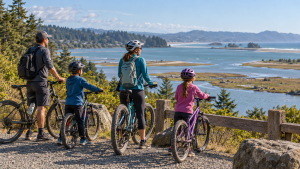 Much of the scenery that makes the trail attractive is also sensitive wildlife habitat. Wetlands surrounding Humboldt Bay provide feeding, resting, and nesting areas for numerous species.
Visitors can help protect these areas by remaining on designated trails, observing posted restrictions, keeping appropriate distance from wildlife, and taking all trash with them. Dogs should be managed according to the rules posted for each trail or wildlife area.
These habits are particularly important around birds. Approaching wildlife too closely for photographs can disturb feeding or resting animals. A telephoto lens or binoculars generally provides a better experience without interfering with natural behavior.
Planning a Humboldt Bay Trail Day
A trail outing can easily become part of a broader Humboldt County itinerary. One option is to begin with a morning walk near Arcata Marsh, stop in Arcata for lunch, then explore a waterfront section in Eureka later in the day.
Travelers spending several days in the county can alternate coastal recreation with redwood destinations. The official Redwood Coast visitor information site provides ideas for redwood parks, beaches, scenic drives, towns, and other attractions throughout Humboldt County.
This approach also helps reveal why Humboldt is more than a single-destination redwood trip. Forests may receive much of the attention, but trails, wetlands, coastal communities, and Humboldt Bay itself contribute substantially to the region’s character.
What the Trail Expansion Could Mean for Humboldt County
Extending the trail farther south could eventually provide new recreational connections for residents, students, commuters, and visitors. It could also make additional sections of Humboldt Bay easier to experience without relying exclusively on a vehicle.
The proposed College of the Redwoods extension remains a developing project, so details may change as planning, engineering, funding, environmental review, and future construction decisions progress.
For now, visitors already have substantial portions of the Humboldt Bay Trail to explore. The expanding network offers an increasingly connected way to discover Arcata, Eureka, wetlands, waterfront scenery, and the broader Humboldt Bay landscape while experiencing one of Northern California’s most distinctive coastal environments.